Dating at 50 as a man: what's actually different
The last time you asked someone out, you probably called their house. Plenty has changed since then, and some of it works in your favor. The part that trips up many men at this stage isn't the apps. It's how small the circle has gotten.
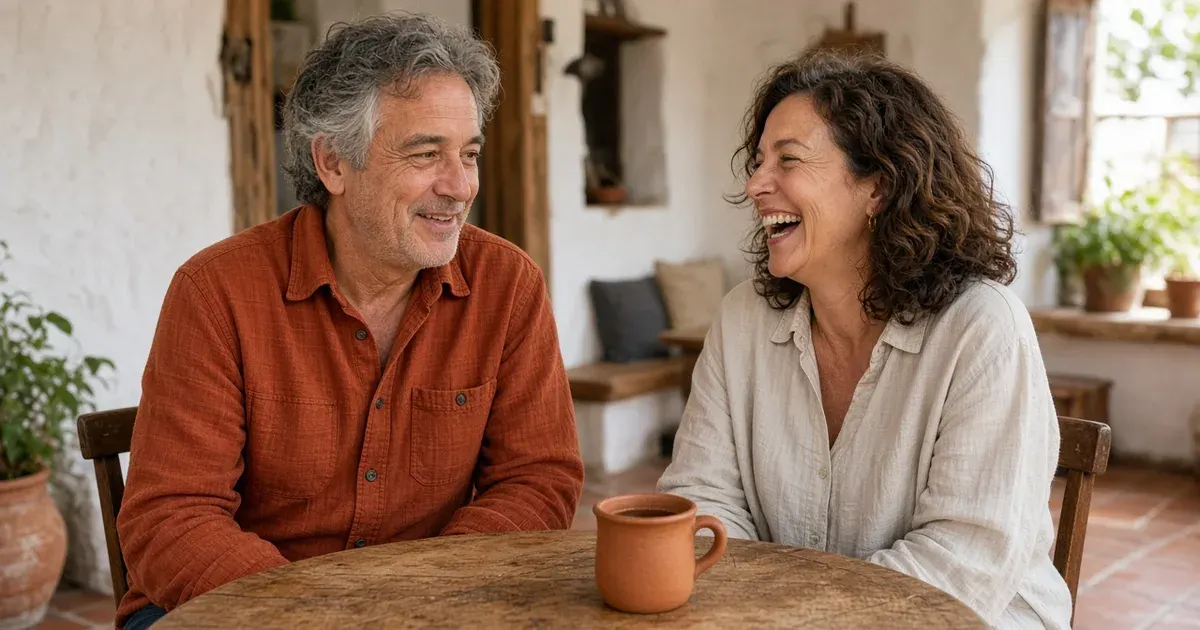
Dating at 50 as a man is different mostly in two ways: your social circle is probably smaller than you realize, and many men want a committed partner faster than the women they’re meeting do. Neither is a reason not to date. Both are reasons to go a little slower than your instinct says, and to build a life with more people in it while you do.
How many men are in this position?
More than you’d think. Researchers Susan Brown and I-Fen Lin found the divorce rate among Americans 50 and older doubled between 1990 and 2010.1 By 2010, roughly one in four divorces involved someone 50 or older.1
So if you’re newly single after a long marriage, you’re part of a large group. Many of the women you’ll meet have been through something similar.
Do men find new partners more easily?
On average, men repartner more often after a later-life divorce, though it’s far from guaranteed.
Using a long-running national survey of older Americans, Brown and colleagues found that about 37% of men and 22% of women formed a new partnership within ten years of a divorce at 50 or older.2 For men especially, that more often meant living together than remarrying.2 Money, health and social ties were all linked to who repartnered.2
That last point is the one to hold onto. Social ties matter.
Why does the social circle matter so much?
Because for many men, it quietly shrank during the marriage.
Sociologists Summer McWilliams and Anne Barrett interviewed 18 people aged 53 to 74 who were dating online. The men described narrow social networks as a real barrier.3 In some marriages, one spouse keeps up the friendships, the invitations and the calendar. After a divorce, the other may find there isn’t much left.
Meet Greg. He’s 53, a civil engineer, divorced two years after 27 years of marriage. His ex-wife had organized almost every dinner they went to. When he started dating, he realized he didn’t have anyone to tell about the dates.
- What happened: three first dates in a month, and no one to talk them over with.
- The reading: “I’m bad at this now.”
- The fear: that he’ll be alone for good.
- The next step: rebuild the circle while he dates, not after.
He joined a Tuesday cycling group. It didn’t produce a date. It did give him people to have breakfast with on Sundays, and the dates got easier.
Do men and women want different things at this stage?
Often, somewhat. In the same interviews, the men tended to be looking for a committed relationship, while the women more often wanted companionship without taking on a caregiving role.3
That’s a small study, and plenty of people don’t fit it. But it’s worth knowing. If you’re hoping to find a new wife and she’s hoping for a good companion who lives in his own house, neither of you is wrong. You may just need to talk about it sooner. Slower and more separate is often the design, not a sign she isn’t interested.
What should a first date look like now?
Short and simple. Coffee, lunch or a walk in daylight, an hour or so. Not dinner and a show.
A few things tend to go well:
- Ask questions. Curiosity carries a first date further than a good story does. Our guide to first date questions in your 50s has ideas.
- Mention the divorce briefly, without the full history or a verdict on your ex.
- Follow up the next day if you’d like to see her again. Say so plainly.
What about online dating and safety?
Apps and sites are a normal way to meet people at this age. Most people on them are who they say they are.
The Federal Trade Commission describes the typical romance scam: someone moves the chat off the app, talks often, can never meet, and eventually asks for money.4 Its rule is simple: never send money or gifts to someone you haven’t met in person.4 Make that a rule you keep for everyone. For more, see how to date online safely in your 50s.
Limits of these studies
Try it
What's the hardest part right now?
Steal this text
Say it in your own words, or start from these
A first message that isn't a résumé
Your photo from the trail in Zion made me smile. I hiked part of it last spring. Would you like to get a coffee this Saturday?
When the divorce comes up on a date
I was married 27 years. We divorced two years ago, and we're on decent terms for the kids' sake. I'm glad to talk about it, but I'd rather hear about you.
A rule you keep for everyone
I don't send money to anyone I haven't met in person. It's a rule I keep for everyone, nothing personal.
People who talk about this
- Credentialed source
Bella DePaulo
Research and writing on single life, including people who choose to stay single and live full lives on their own terms.
- Credentialed source
Marisa G. Franco
Friendship, loneliness and belonging, and how adults make and keep close friends.
- Credentialed source
Pepper Schwartz
Research and writing on love, sex and relationships, including dating and partnership later in life.
- Trending voice
Esther Perel
Desire, infidelity and the tensions inside long term relationships, often through real couples sessions on her podcast.
Further reading
AARP
How to Succeed at Dating in Your 50s (opens aarp.org)Practical advice on how dating in your 50s differs and how to approach it with realistic expectations.
Federal Trade Commission
What To Know About Romance Scams (opens consumer.ftc.gov)The warning signs of romance scams and what to do if someone you met online asks for money.