Dating in your 50s: what should you expect?
Expect a slower start, more people with history, and a mix of good and frustrating experiences, especially online. Expect to meet a scam attempt at some point, too. Most of it is manageable with a few steady habits and a clear sense of what you want this time.
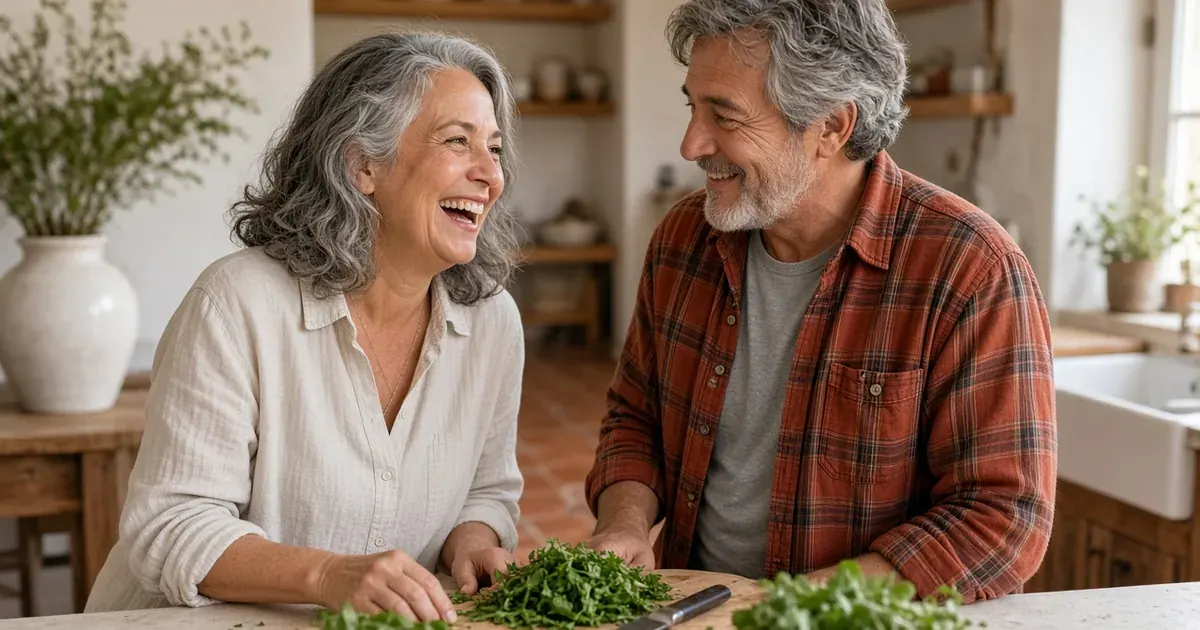
Expect a slower start, more people with history, and a mix of good dates and frustrating ones, especially online. Expect to meet a scam attempt at some point, too. Most of it is manageable with a few steady habits and a clear sense of what you want this time around.
Who is out there in your 50s?
More single people than you might think, and many of them aren’t in a hurry. In Pew’s 2019 survey, 28% of adults ages 50 to 64 were single, meaning not married, living with a partner or in a committed relationship.4 Half of those singles said they weren’t looking for a relationship or dates at the moment.4
That cuts both ways. The people who are looking tend to be looking on purpose. And many people your age are content, busy or recovering from something, so a slower pace is normal.
Most people you meet will have history: a divorce, a long relationship, a late spouse, grown children, aging parents. That’s not baggage. It’s a life, and you have one too.
Meet Carol, 56, a dental hygienist, divorced six years ago. Her kids are out of the house. A friend talked her into trying a dating site last spring. She went on four first coffees, had one lovely second date, fended off one obvious scammer, and met the man she’s seeing now at her niece’s graduation party. Not through the app at all.
Should you expect to date online?
It’s an option, not a requirement. About a quarter of people in their 50s (23%) have ever used a dating site or app, Pew found.1 But only 3% of adults 50 and older had used one in the past year, and just 6% of partnered adults 50 and older met their partner online.1 Friends, family, work, church, clubs and chance still do a lot of the introducing at this age.
If you do try it, expect mixed results. Among online daters 50 and older, women were more likely than men to describe their experiences as negative (57% vs. 38%).1 And 26% said someone had kept contacting them after they’d said they weren’t interested.1 That’s frustrating, and it’s also useful to know in advance, so it doesn’t feel personal when it happens.
Will you run into scams?
Probably. Among online daters 50 and older, 47% said they had come across someone they thought was trying to scam them, including 52% of those 50 to 64.1 In 2023 the Federal Trade Commission received 64,003 romance scam reports, with $1.14 billion in reported losses and a median loss of $2,000 per person.2
It’s no surprise, then, that people your age are more likely than younger adults to see risk as part of why dating feels harder. Among people who said dating had gotten harder, 30% of 50 to 64 year olds cited increased risk, including being scammed or lied to, compared with 16% of 30 to 49 year olds.3
The good news is that a few rules stop most of it. The FTC’s advice is blunt:2
- Never send money, gift cards, crypto or wire transfers to anyone you haven’t met in person.
- Be suspicious of excuses about why they can’t meet, like being overseas or on an oil rig.
- Treat a sad story that ends in a request for money as a scam until proven otherwise.
- Tell a friend or family member you’re talking to someone, and listen if they’re worried.
- Meet in a public place and let someone know where you’ll be.
Carol’s scammer was a “widowed engineer” who couldn’t video chat and needed help with customs fees after two weeks. She blocked him and reported the profile. It took about ninety seconds.
What does a good start look like?
Short, public and low-pressure. Coffee, a walk, a museum hour, lunch. Plan an end time so nobody feels trapped. If it goes well, the second date can be longer.
Say what you want early, in a sentence. Something like, “I’m looking for companionship and maybe more, at a comfortable pace.” Most people your age find that a relief, not a demand.
Expect some first dates to be pleasant and go nowhere. That’s not failure. At this age, a nice hour of conversation with someone new is a perfectly good outcome, and it’s practice for the date that does lead somewhere.
And pace yourself. There’s no need to rush toward moving in or meeting the family. Many people at this stage take their time on purpose.
What might surprise you?
- How much you’ve changed. You probably know your non-negotiables better than you did at 30.
- How direct people can be. Many daters your age skip the games.
- How much logistics matter. Kids, grandkids, work, health, aging parents and two established homes all shape the calendar.
- How good it can feel. A real conversation with someone new, at this age, can be a genuine pleasure.
What to do this week
- Write down what you’re looking for, in a few lines: companionship, partnership, something casual, or not sure yet.
- Tell two friends you’re open to meeting someone. Ask them to think of anyone kind.
- If you try a site, pick one, write an honest profile, and set your safety rules before your first message.
- Make the money rule non-negotiable. No money, gift cards or crypto to anyone you haven’t met.
- Plan short first dates in public places, with an end time.
- Report scams to the site and to the FTC if you run into one.
What doesn’t the research show?
- The online dating figures are from 2022 and describe people who have ever used it, not how well it works for finding a partner.1
- FTC figures only count reported scams. Many go unreported, and the median loss doesn’t tell you any one person’s risk.2
- The “dating is harder” question asked about dating in general compared with 10 years earlier, in a 2019 survey.3
- The single figures cover ages 50 to 64 as a group.4
- The first-date advice is practical guidance, not a research finding.
Try it
What are you most unsure about?
Steal this text
Say it in your own words, or start from these
Saying what you want, early
I'll be straightforward: I'm looking for companionship and maybe something more, at a comfortable pace. What about you?
When money comes up from someone you haven't met
I'm sorry you're dealing with that. I have a firm rule that I don't send money to anyone I haven't met in person. I hope it works out.
People who talk about this
- Credentialed source
Bella DePaulo
Research and writing on single life, including people who choose to stay single and live full lives on their own terms.
- Credentialed source
Marisa G. Franco
Friendship, loneliness and belonging, and how adults make and keep close friends.
- Credentialed source
Pepper Schwartz
Research and writing on love, sex and relationships, including dating and partnership later in life.
- Trending voice
Esther Perel
Desire, infidelity and the tensions inside long term relationships, often through real couples sessions on her podcast.
Further reading
AARP
How to Succeed at Dating in Your 50s (opens aarp.org)Practical advice on how dating in your 50s differs and how to approach it with realistic expectations.
Federal Trade Commission
What To Know About Romance Scams (opens consumer.ftc.gov)The warning signs of romance scams and what to do if someone you met online asks for money.