No texting between dates after 50: a bad sign?
Lovely evening, a plan for next Friday, then silence until Friday. For many people over 50 that's simply how dating works. Here's how to tell a texting style from a lack of interest, and how to ask for what you need.
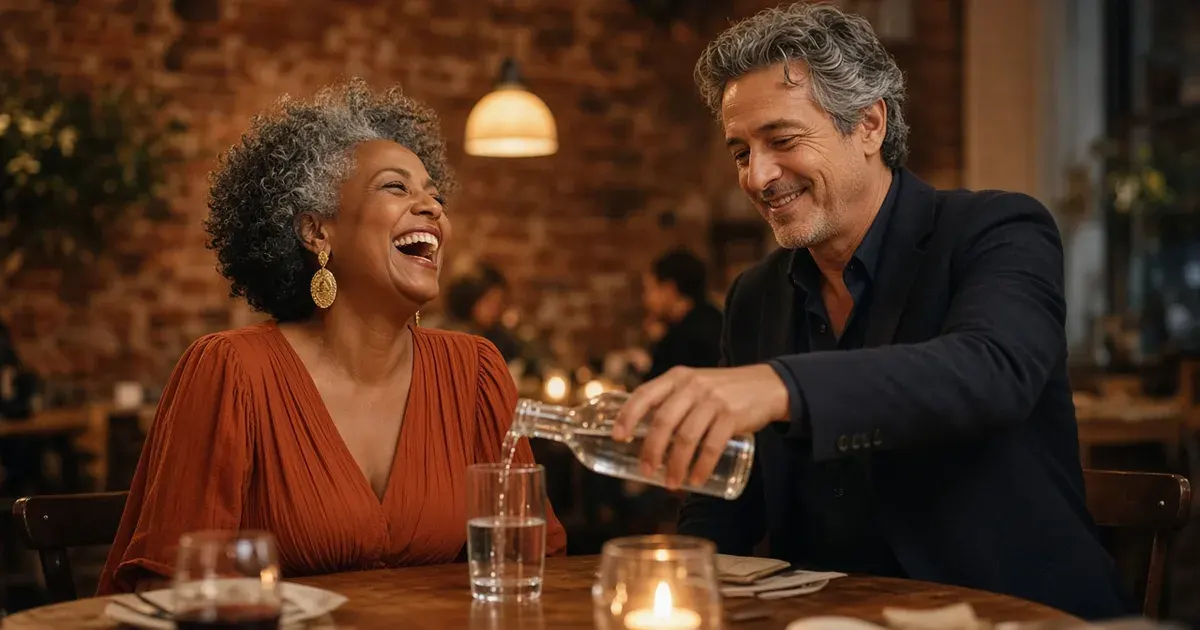
Getting no texts between dates after 50 is usually a style, not a warning sign. Plenty of people in this age group text less than younger daters do, and some deliberately save conversation for when they’re together. The signs that matter are whether plans get made and kept, and how your date responds if you ask for a bit more contact.
Texting habits differ by age
In a study of people in romantic relationships, younger partners used texting, social media and nearly every other medium to stay in touch more than older partners did. Email was the one exception.1 Expressing affection was the most common reason people texted at all.1
So if your date treats texting as a way to sort out logistics rather than a running conversation, they may just belong to the older end of a real generational gap. The study looked at couples already together, not early dating, but the difference in habits is the same one many people over 50 notice.
Some people prefer it this way
Dating coach Sabrina Zohar told the Los Angeles Times that she once asked a new partner for more texting between dates. He was in tech, stared at a screen all day, and told her it was “not a sign of my disinterest.” He’d rather spend real time together.2 The therapist in the same piece, Traci Terrill, advised giving people time to learn each other’s texting style rather than assuming daily texts mean someone cares.2
The writer Clara Artschwager described the same idea in The Cut. On their third date, the man she was seeing asked if they could stop texting. They agreed to make the next plan on each date, phone if they needed each other, and keep texts to logistics.3 She loved it.
When the quiet does mean something
Quiet between dates becomes worth noticing when it spreads to the practical stuff:
- Plans get vague. “Let’s do something soon” instead of a day and time.
- Logistics go unanswered. A simple “Still on for Thursday?” gets no reply.
- Dates keep getting moved. Especially if the texting stays warm while the meetings don’t happen.
- Your request gets brushed off. Asking for a midweek hello is reasonable. Being told it’s silly is an answer about how they treat what you need.
If slow replies are what’s eating at you, when slow texting feels like rejection goes into why. Worried the quiet means they’re cooling off? Slower pace or losing interest sorts one from the other.
Ask for what suits you
People in their fifties and beyond are often clear about what they’re after. In AARP’s January 2026 survey of 300 online daters 50 and older, 38% were looking for a long-term partner and 39% wanted to date casually and meet new people.4 Couples therapist Giulia Davis, quoted in that piece, describes the point of dating after 50 as having someone to share the ordinary parts of life with.4
If a short midweek hello is one of those ordinary parts for you, say so. It’s a preference, not neediness. How someone answers tells you more than weeks of guessing. For a sense of what steady contact looks like at this age, there’s reliable texting at this age.
What the evidence leaves out
- The age and texting study looked at people already in relationships, and it was published in 2011. Habits have shifted since.
- The LA Times and Cut stories are individual experiences, not research.
- AARP’s survey was a small online poll by its product-review team of people who had used dating platforms, so it may not reflect everyone dating after 50.
Try it
Style, or a signal? Sort each situation.
Steal this text
Say it in your own words, or start from these
Asking for a little more contact
I've really enjoyed our dinners. I'm someone who likes a quick hello midweek, nothing big. Would that suit you?
If you prefer the quiet too
Honestly, I like that we save it for when we see each other. Same time next week?
People who talk about this
- Credentialed source
Bella DePaulo
Research and writing on single life, including people who choose to stay single and live full lives on their own terms.
- Credentialed source
Marisa G. Franco
Friendship, loneliness and belonging, and how adults make and keep close friends.
- Credentialed source
Pepper Schwartz
Research and writing on love, sex and relationships, including dating and partnership later in life.
- Trending voice
Esther Perel
Desire, infidelity and the tensions inside long term relationships, often through real couples sessions on her podcast.
Further reading
AARP
How to Succeed at Dating in Your 50s (opens aarp.org)Practical advice on how dating in your 50s differs and how to approach it with realistic expectations.
Federal Trade Commission
What To Know About Romance Scams (opens consumer.ftc.gov)The warning signs of romance scams and what to do if someone you met online asks for money.