After a date in your 50s, who texts first, and when?
Either of you can, and the same evening or next day is fine. A short thank-you is polite; a thank-you with a next plan shows interest. After one friendly follow-up, silence is an answer you can let stand.
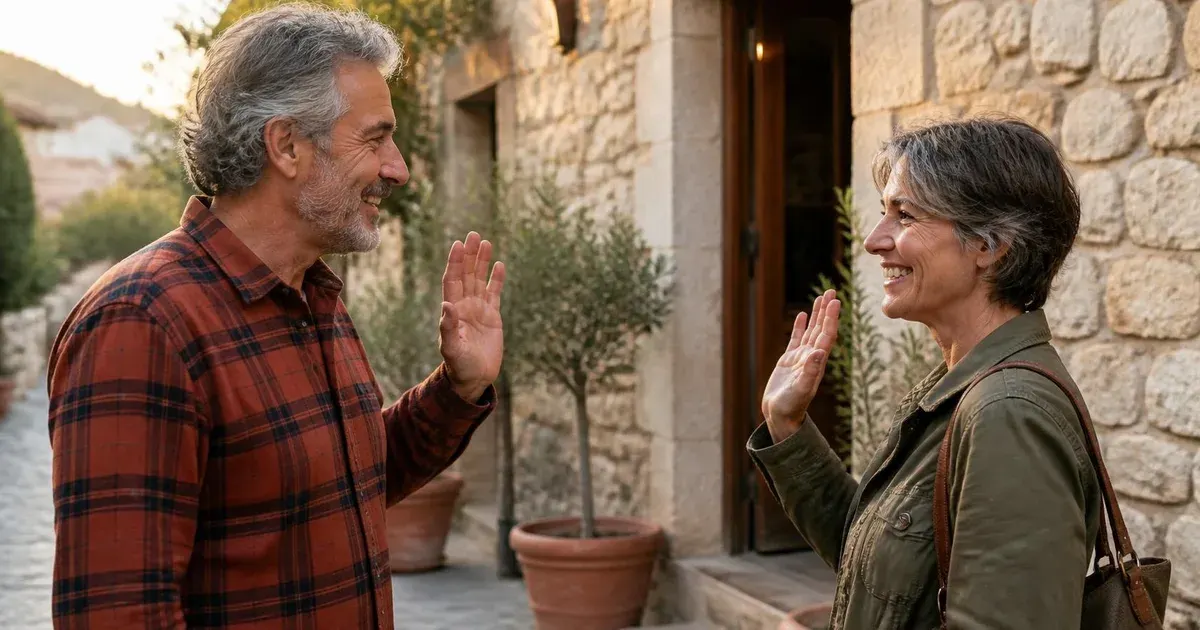
Either of you can text first, and that evening or the next day is fine. A short thank-you is polite. A thank-you with a next plan is interest. After one friendly follow-up, silence is an answer, and you can let it stand without blaming yourself.
Should the man or the woman send the first text after a date?
Whoever wants to. The old rule that one person calls and the other waits doesn’t hold up well in your 50s, and following it can leave two people who liked each other both sitting by the phone.
Meet Gail. She’s 57, a dental hygienist, divorced after 26 years of marriage. On Friday she had dinner with Howard, 60, a retired bus mechanic she met through a friend’s book club. It went well. They talked for three hours and he walked her to her car. On Saturday morning she found herself staring at her phone, unsure whether a woman was supposed to text first, and if not, how long she should wait.
There’s a reason to send it yourself. In a series of studies, people consistently underestimated how much someone new had liked them after a conversation.1 Researchers called it the liking gap.1 If Gail and Howard both left thinking “that was nice, but who knows,” a short text from either one clears it up.
How soon should you send it?
The same evening or the next day works. There’s no prize for waiting.
- The same evening: a brief “thank you, home safe” is gracious and low-pressure.
- The next day: a slightly fuller message, ideally with something specific from the evening, or a next plan.
- After two or three days: still fine, but if you want to see them again, include a day.
Some people in this age group simply text less. In a study of people in committed relationships, younger participants used almost every kind of media more often with their partners than older participants did.2 So a slower or shorter reply from someone in their 60s may say more about habit than about interest.
How do you tell polite from interested?
The plan is usually the difference.
- Polite: “Thank you for a lovely evening.” “Let me know you got home.”
- Interested: “I had a great time. Lunch next week?” “I keep thinking about that story you told.”
- In between: “We should do it again sometime.” Warm, open, and not yet a plan.
Some people also show interest very carefully. University of Kansas professor Jeffrey Hall describes a “polite” flirting style: respectful, hands-off and cautious, and so cautious that these flirts “can end up taking forever to get a message across.”3 Women and people 40 and older were the most likely to prefer that style.3 If someone seems interested but slow, they may simply be polite. One clear invitation from you can save weeks of reading between the lines.
What do you say if you want to see them again?
Thank them, mention one detail, and suggest a day. Keep it to three or four lines.
Gail sent this at 10:30 Saturday morning: “Thank you for dinner. I enjoyed hearing about your granddaughter’s science fair. Would you like to get lunch next week? I’m free Tuesday or Thursday.” Howard called that afternoon. He’d been drafting a text and kept deleting it.
That’s not a guarantee for anyone. It’s just how often a simple, kind message breaks a stalemate.
What if they don’t reply, or only say thanks?
Give it a day or two. If they reply politely but don’t pick up the plan, you can offer once more with a different day. If that’s also met with a kind but vague answer, or nothing, you have your answer.
That can sting, especially if the evening felt good. It helps to remember that a pleasant date and a good fit are not the same thing. Someone can enjoy your company and still not want a second date, and that tells you nothing about your worth.
What doesn’t help is sending a third and fourth message, or rereading their one-line reply all weekend. One follow-up is etiquette. More than that tends to cost you more than it tells you.
And if you’re the one who isn’t interested?
Say so, kindly, within a day or two of their message. A short, clear note is more respectful than going quiet: “Thank you for dinner. I enjoyed meeting you, and I don’t think we’re the right fit. I wish you well.” No long explanation needed.
Is it different if you met online?
A little. When you met through friends or a group you both belong to, there’s a shared circle and a natural next meeting. When you met online, the follow-up message is often the main bridge to a second date, so it carries more weight.
A few simple habits help:
- Move to text or a call after the first date, if you haven’t already.
- Keep the follow-up personal. Mention something from the evening so it’s clearly written for them.
- Be patient with the medium. Some people check messages once a day.
- Meet the second time in public too, as you did the first.
If you’re new to dating after a long marriage, it’s normal for all of this to feel unfamiliar. The etiquette has changed less than it seems. Kindness, clarity and a specific invitation still do most of the work.
What to do tonight, and this week
Tonight
- Send a short thank-you if you haven’t. “Home safe, thank you for a lovely evening” is plenty.
- Put the phone away after you send it.
This week
- If you’d like a second date, send one message with a specific day.
- Allow one follow-up, then let silence be an answer.
- If you’re not interested, tell them kindly and briefly.
- Notice how you feel waiting. If the waiting takes over your week, make a plan with a friend for the evening you’d otherwise spend watching the phone.
What doesn’t the research show?
- The liking gap was measured after conversations, not romantic dates, and in groups that included students and workshop attendees.1
- The flirting style finding comes from a university news summary of survey research, not a study of first-date texting.3
- The media-use study looked at people already in committed relationships.2
- The sort game and scripts are practical guidance, not research findings.
Try it
Polite, or interested? Sort the message you got.
Steal this text
Say it in your own words, or start from these
Same-evening thank-you
Thank you for tonight. I really enjoyed talking with you. Home safe.
Next-day, with a plan
I had a lovely time yesterday. Would you like to have lunch next week? I'm free Tuesday or Thursday.
Kindly closing it
Thank you again for dinner. I enjoyed meeting you, and I don't think we're the right fit. I wish you well.
People who talk about this
- Credentialed source
Bella DePaulo
Research and writing on single life, including people who choose to stay single and live full lives on their own terms.
- Credentialed source
Marisa G. Franco
Friendship, loneliness and belonging, and how adults make and keep close friends.
- Credentialed source
Pepper Schwartz
Research and writing on love, sex and relationships, including dating and partnership later in life.
- Trending voice
Esther Perel
Desire, infidelity and the tensions inside long term relationships, often through real couples sessions on her podcast.
Further reading
AARP
How to Succeed at Dating in Your 50s (opens aarp.org)Practical advice on how dating in your 50s differs and how to approach it with realistic expectations.
Federal Trade Commission
What To Know About Romance Scams (opens consumer.ftc.gov)The warning signs of romance scams and what to do if someone you met online asks for money.