Single after 50 in 2026: chemistry, caution, new odds
People over 50 came out of this year's dating research looking more romantic than the stereotype, and more guarded about the parts of modern dating that feel fake. Add in a divorce rate that has been climbing for their age group for three decades, and you get a dating pool that's bigger, more hopeful and a little more careful than it used to be.
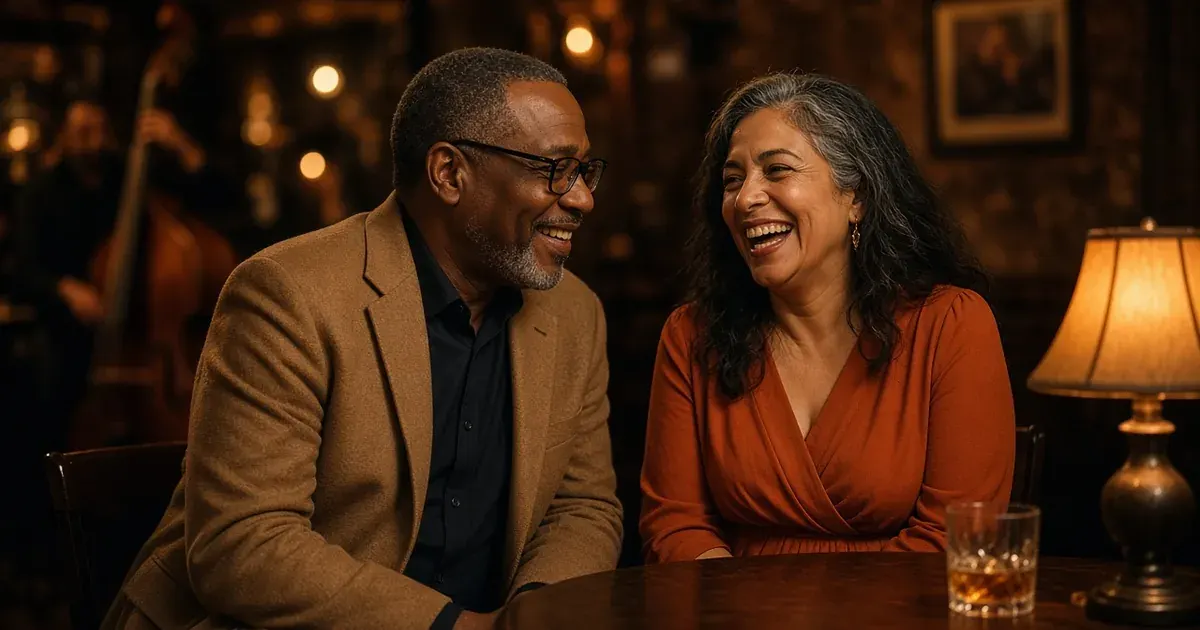
Singles over 50 are romantic and wary at the same time. In the 50-plus slice of the 2025 Singles in America survey, reported by AARP, 66% said they’d treat a match’s use of AI in online dating as a deal-breaker, and 91% called sexual chemistry essential.1 Meanwhile the divorce rate for people 45 and up has risen since 1990, even as it fell for younger adults.2
How much does chemistry matter at this age?
The 2025 data, from 2,213 adults over 50 in a study run by Match with the Kinsey Institute, pushes back on the idea that dating later in life is all companionship and no spark.1 91% said sexual chemistry is essential, and 74% said they can gauge it within the first three dates. Belief in love at first sight was 58%, up from 43% when the question was last asked of this age group in 2014.1
There’s a deeper look at what that means in practice in does chemistry still matter after 50?
Caution: the new part of the picture
Fakes
AI has started to show up in later-life dating. In 2025, 10% of singles over 50 had used AI in dating, up from 1% in 2023.1 The 2026 survey puts Gen X singles at 24% and Boomers at 5%.5
But tolerance runs out fast when it’s the other person. Two-thirds of singles over 50 said a match using AI in online dating would be a deal-breaker. That was especially true for AI-altered photos (49%) and AI-written conversations past the opening message (36%).1
Scams
The same instinct is useful elsewhere. In FTC complaint data for 2025, nearly 60% of people who reported losing money to a romance scam said it began on social media. Scammers often shaped their approach around a person’s profile, then invented a crisis that needed money or nudged people toward a fake investment site.3 Our guide to spotting a romance scam before it costs you has the warning signs.
New odds: who’s single after 50
Divorce at this age is more common than it was a generation ago. NCFMR’s analysis found the overall divorce rate fell from 19 to 13.7 per 1,000 married people between 1990 and 2023. Over the same period it rose for every age group from 45 up, and more than tripled for people 65 and over.2 Our explainer on gray divorce statistics covers the full trend.
Most of them want to meet someone. In 2026, 69% of Gen X singles (ages 46 to 61 in this survey) and 55% of Boomers said they’re interested in or open to dating.4 They’re less likely to rush it, though. 41% of Gen X and 28% of Boomers said they’d start dating a perfect match right away.4 And singles 39 and older said honesty and reliability matter more to them than they used to.5
Key takeaways
- Chemistry is non-negotiable for 91% of singles over 50.1
- Fake-feeling dating is a deal-breaker for two in three.1
- Romance scams often start on social media, nearly 60% of reported cases in 2025.3
- Divorce after 45 has risen since 1990, even as the overall rate fell.2
What are people over 50 getting wrong about each other?
The AARP report found many singles over 50 feel misread by the other sex. 29% of men said women wrongly assume they’re only interested in sex, and 24% felt wrongly seen as commitment-phobic. Among women, 24% said they’re unfairly seen as looking for a provider rather than an equal partner.1 Kinsey researcher Amanda Gesselman’s suggestion was simple: talk early about what kind of relationship you each want.1
FAQ
What is dating like after 50 in 2026?
More hopeful and more cautious than the stereotype. Most singles over 50 call chemistry essential, and two in three would treat a match’s use of AI in online dating as a deal-breaker.1
Is the divorce rate going up for people over 50?
Yes. From 1990 to 2023, divorce rates rose for everyone 45 and older and more than tripled for those 65 and up, while they fell for younger adults.2
Where do romance scams usually start?
In 2025 FTC reports, nearly 60% of romance scam losses that people reported started on social media.3
Try it
Someone you met recently feels promising. What's giving you pause?
Steal this text
Say it in your own words, or start from these
Moving to a real conversation
I've really enjoyed messaging. Would you be up for a call this week? I'd like to hear how you actually sound.
Asking what they're looking for
Before we get much further, can I ask what you're hoping for from dating right now? I'll tell you mine too.
People who talk about this
- Credentialed source
Bella DePaulo
Research and writing on single life, including people who choose to stay single and live full lives on their own terms.
- Credentialed source
Marisa G. Franco
Friendship, loneliness and belonging, and how adults make and keep close friends.
- Credentialed source
Pepper Schwartz
Research and writing on love, sex and relationships, including dating and partnership later in life.
- Trending voice
Esther Perel
Desire, infidelity and the tensions inside long term relationships, often through real couples sessions on her podcast.
Further reading
AARP
How to Succeed at Dating in Your 50s (opens aarp.org)Practical advice on how dating in your 50s differs and how to approach it with realistic expectations.
Federal Trade Commission
What To Know About Romance Scams (opens consumer.ftc.gov)The warning signs of romance scams and what to do if someone you met online asks for money.
Sources
- Exclusive: Gen X and Baby Boomers Are Looking for True Romance
- Age Variation in the Refined Divorce Rate, 1990 & 2023 (FP-25-24)
- Reported losses to scams on social media eight times higher than in 2020
- Match Unveils 15th Annual Singles in America Study
- 15th annual Singles in America Survey reveals how relationships, marriage, money and family are changing