Single for the holidays after 50: plan your own season
November arrives and suddenly every gathering seems built for couples. Being single at this time of year is more common than the cards suggest, and the people who get through it well tend to do one thing early: decide what they want the season to look like.
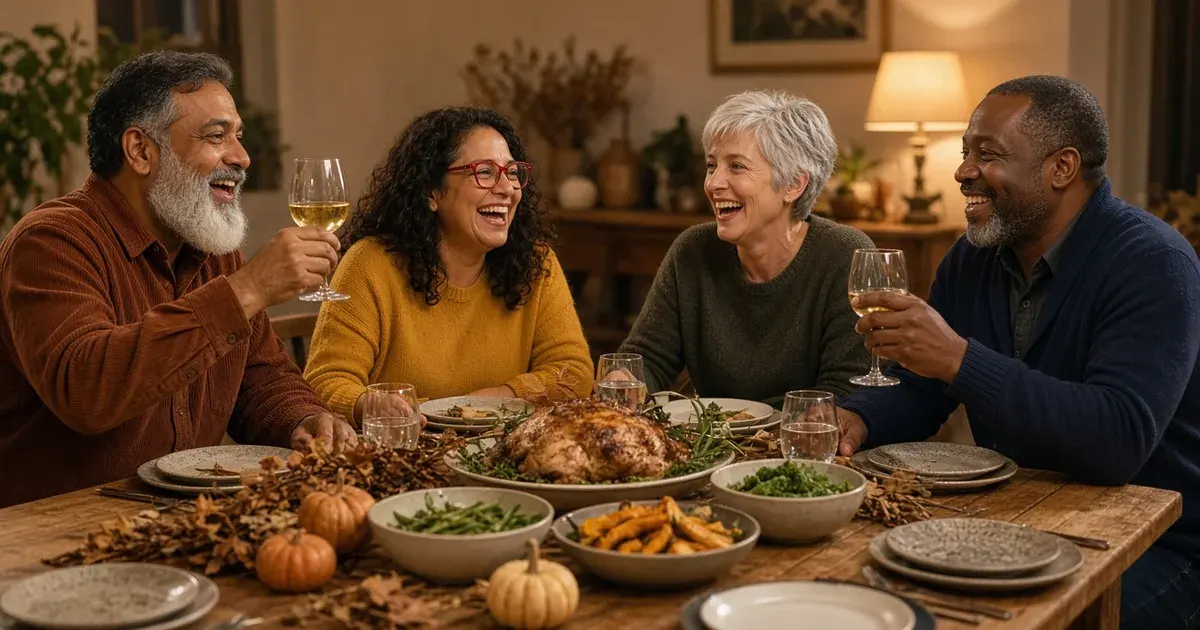
Somewhere around the first week of November it starts: the invitations addressed to couples, the “who are you spending it with?” questions, the friends who go quiet because they assume you’re busy or assume you’re not. If you’re in your 50s and single, you may love the season, dread it, or both in the same afternoon.
You’re not unusual. Pew’s analysis of census data found that the share of adults aged 40 to 54 who were neither married nor living with a partner rose from 24% in 1990 to 31% in 2019.3 A lot of people at nearby tables are navigating the same thing.
The season is stressful for almost everyone
An APA poll from November 2023 found that 89% of U.S. adults named something that stressed them about the holidays, money most of all. Missing family or loved ones came up for 38%. And 72% agreed the season can feel bittersweet.1
That bittersweet note is worth naming. It’s not only a single-person thing, and it doesn’t mean something’s wrong with how you’re living.
The same poll found that among people who felt holiday stress, 21% said they coped by isolating themselves. And while 70% said they were comfortable talking to others about it, only 41% actually did.1 That gap, between being willing to reach out and doing it, is where a lot of hard evenings come from.
Time alone adds up
AARP’s 2025 survey of adults 45 and older found 40% were lonely, up from 35% in 2010 and 2018, with men slightly more likely than women to say so.2 Lonely respondents spent an average of 7.3 hours a day alone, against 5.6 for everyone else.
Being alone and being lonely aren’t the same thing. Plenty of people treasure a quiet holiday. The point is to choose the quiet, not just end up in it.
Plan the season, not just the day
The big day usually gets sorted somehow. It’s the stretches around it, the long weekend, the days between Christmas and New Year, that tend to go empty. A few ideas that tend to work for people:
- Host something small. A friends’ dinner, a movie afternoon, a walk on the day itself. People who aren’t with family often wait to be invited; you can be the one who asks.
- Give some time away. A large study of older adults using Health and Retirement Study data found that, among people who had recently lost a spouse, volunteering two or more hours a week was associated with less of the loneliness that typically follows.4 That’s a correlation in a widowed sample, but the idea of structured time around other people translates.
- Say yes selectively. Not every invitation deserves a yes because you’re free. Choose the ones you’ll actually enjoy.
If the holidays are also stirring up an old relationship, why can’t I move on after 50 is written for that. And if dating in the new year is on your mind, what to expect dating in your 50s is a practical starting point.
What these numbers leave out
- The APA poll covers all adults, not just people who are single or over 50.
- AARP’s loneliness figures are self-reported and the survey isn’t specific to the holiday months.
- The volunteering study is about widowed adults and is correlational; it doesn’t show volunteering causes less loneliness.
Try it
Which of these have you already sorted out for this season?
Steal this text
Say it in your own words, or start from these
Inviting rather than waiting
I'm doing a low-key dinner on the 26th for anyone who's around and not with family. Want to come?
Declining kindly
Thank you so much for thinking of me. I've got other plans that day, but I'd love to see you before New Year's.
People who talk about this
- Credentialed source
Bella DePaulo
Research and writing on single life, including people who choose to stay single and live full lives on their own terms.
- Credentialed source
Marisa G. Franco
Friendship, loneliness and belonging, and how adults make and keep close friends.
- Credentialed source
Pepper Schwartz
Research and writing on love, sex and relationships, including dating and partnership later in life.
- Trending voice
Esther Perel
Desire, infidelity and the tensions inside long term relationships, often through real couples sessions on her podcast.
Further reading
Pew Research Center, 2023
5 facts about single Americans for Valentine's Day (opens pewresearch.org)Quick, reliable numbers on single adults, including how many in midlife are not looking to date.