Finding love after 50 as a woman, by the numbers
The question usually comes with a sinking feeling and a statistic someone half-remembers. The research on women repartnering after 50 has real numbers in it, some of them sobering. It also measures a narrower thing than 'love,' and that gap matters more than people realize.
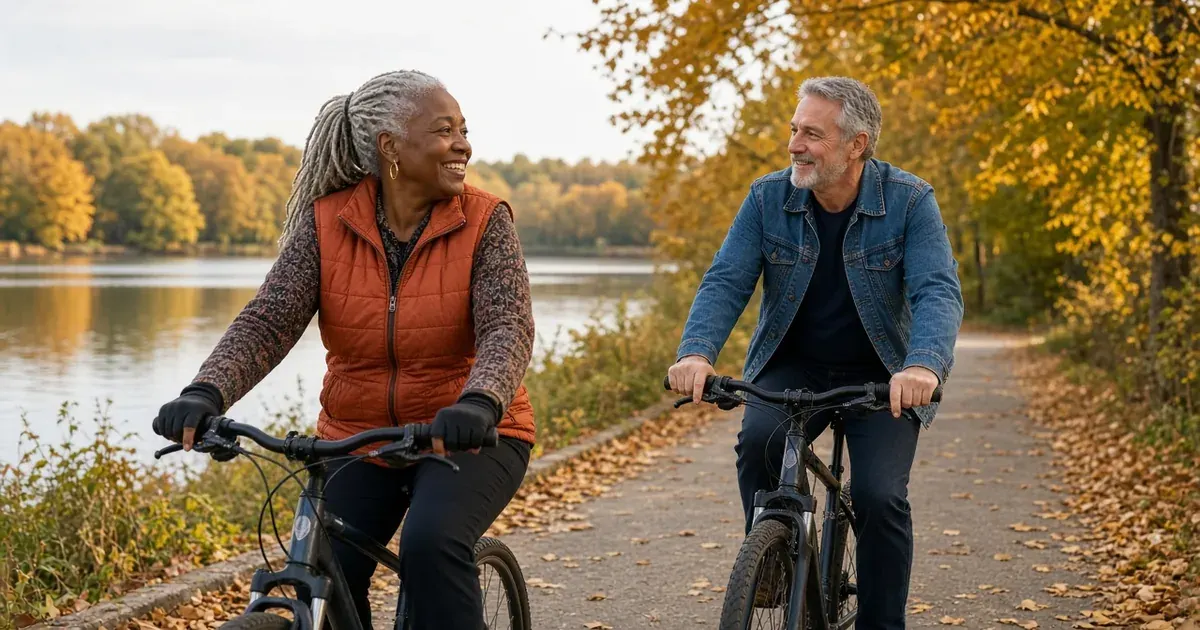
Yes, women do find love after 50, though the research that counts it shows a gap with men. In a large national study of people who divorced at 50 or older, about 22% of women had moved in with or married a new partner within 10 years, compared with 37% of men.1 Those figures only count shared homes and marriages, so they leave out a lot of what people mean by love at this stage.
How many women repartner after 50?
The best data comes from the Health and Retirement Study, a long-running national survey of older Americans. Among people who went through a gray divorce, 22% of women and 37% of men formed a new cohabiting union or remarried within a decade.1
A newer analysis looked at people who separated from a spouse after 50. Within 10 years, 12% of women and 26% of men had formed a live-in union with a new partner. A smaller group reconciled with their spouse: about 7% of women and 11% of men.2
Why are the numbers lower for women?
The studies point to resources and circumstances. In the gray divorce research, economic resources, health and social ties were all linked to repartnering, along with details of each person’s marital history.1 An earlier study of previously married adults over 50 found that wealthier people of both genders were more likely to repartner than to stay single.3
These are correlations from survey data. They show who tends to move in or remarry, not what any one woman’s chances are.
Do these numbers capture dating and relationships?
No, and this is the most important caveat. The studies measure coresidential unions: living together or marriage.12 A woman in a five-year relationship with a man who keeps his own house doesn’t show up as repartnered. Neither does a steady weekend romance.
Living together was the more common route back into partnership than remarriage, particularly for men.1 And later-life cohabitation, unlike cohabitation among young adults, wasn’t marked by economic disadvantage.3
What do women over 50 want from dating?
Interviews with women who dated in their 60s and 70s found dating carried several meanings for them, and that it felt different from dating earlier in life.4 That study was small, 14 women aged 64 to 77, but it’s one of the few that asked older women directly rather than counting outcomes.
Survey data on dating apps adds a less rosy note. Women 50 and older who had used online dating were more likely than men their age to describe the experience as negative, 57% compared with 38%.5 Still, about half of older adults who’d dated online recently said finding a long-term partner was a major reason they were there.5
So what are the real chances?
If “love” means a new live-in partner or husband within a decade of divorce, the best estimate is about one in five women.1 If it includes long relationships with separate homes, steady companionship or a serious romance, the studies above simply don’t measure it, and the true share is higher by some unknown amount.
The short version
- About 22% of women moved in with or married a new partner within 10 years of a gray divorce.1
- Men repartnered more often, 37% in the same study.1
- Resources and health were linked to repartnering for both genders.13
- The counts leave out relationships where partners live apart.12
- Older women rated online dating more negatively than men did.5
For a broader sense of the landscape, dating in your 50s: what to expect is a good starting point. If apps are the part you’d rather skip, there’s how to meet men over 50 without online dating.
Try it
Which of these describe the love you're looking for? Tick all that fit.
People who talk about this
- Credentialed source
Bella DePaulo
Research and writing on single life, including people who choose to stay single and live full lives on their own terms.
- Credentialed source
Marisa G. Franco
Friendship, loneliness and belonging, and how adults make and keep close friends.
- Credentialed source
Pepper Schwartz
Research and writing on love, sex and relationships, including dating and partnership later in life.
- Trending voice
Esther Perel
Desire, infidelity and the tensions inside long term relationships, often through real couples sessions on her podcast.
Further reading
Greater Good Science Center, UC Berkeley
Four Reasons to Stay Single (opens greatergood.berkeley.edu)Makes the evidence-based case that a single life can be full, which helps clarify what you actually want.
Sources
- Repartnering Following Gray Divorce: The Roles of Resources and Constraints for Women and Men
- Marital separation, reconciliation, and repartnering in later life
- Union Formation in Later Life: Economic Determinants of Cohabitation and Remarriage Among Older Adults
- Dating for Older Women: Experiences and Meanings of Dating in Later Life
- Dating at 50 and up: Older Americans' experiences with online dating